
We spend a lot of time on this blog talking about the process and technology of structural foam molding, i.e. the physics of the cellular core, the strategies for multi-up tooling, and the importance of proactive quality control.
But sometimes, the best way to understand the engineering value of structural foam is to look at the “bread and butter” products that keep our machines running.
There is a reason why, if you walk into a hardware store or a warehouse, the largest plastic items you see are almost always structural foam. It’s not just about size; it’s about the specific abuse those parts need to take.
Let’s look at the “Big Three”—Trench Drains, Utility Carts, and Pallets—to understand why they are the perfect case studies for this technology.
1. The Trench Drain: Dimensional Stability Underground
If you look at a cross-section of a trench drain, you are looking at a masterclass in structural foam design. These parts are buried in the ground, meaning they are subjected to fluctuating soil pressures and freeze/thaw cycles. Structural foam wins here because, as we discussed in our guide on picking the right resin, these applications require tough, chemically resistant polymers capable of standing up to road salts, oils, and runoff.
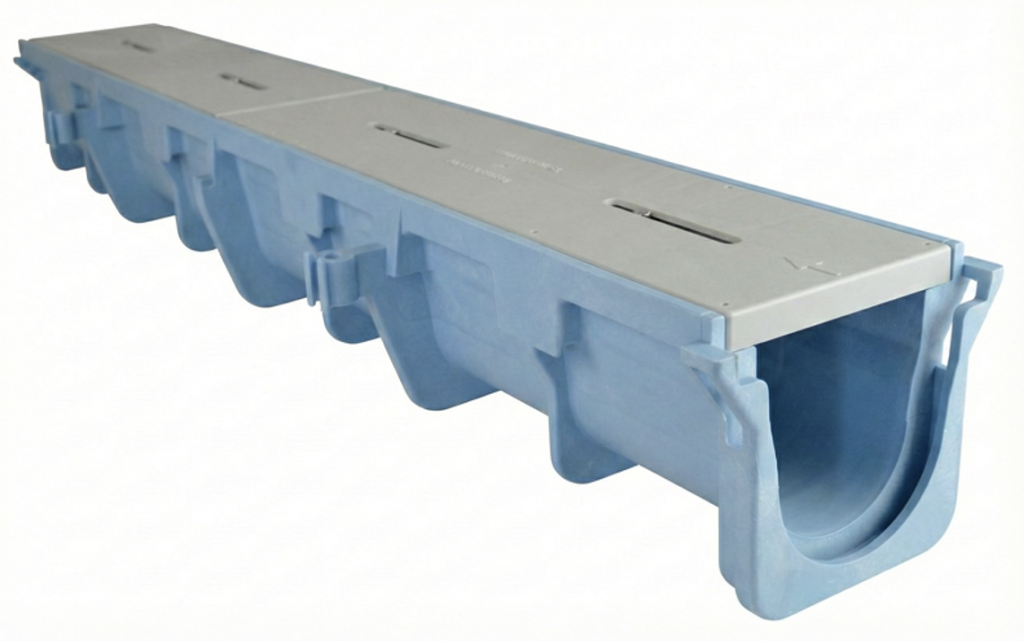
These parts are buried in the ground, meaning they are subjected to fluctuating soil pressures and freeze/thaw cycles.
In addition to the material needs, a solid plastic part of this length—often spanning 4 to 8 feet—would be a nightmare to keep straight due to internal stresses. The low-pressure foam process relieves that stress, ensuring the drain stays straight enough to lock into the next section during installation, while the low viscosity of the melt allows us to fill deep, complex ribbing patterns to hold back tons of soil without the risk of sink marks.
2. The Utility Cart: Impact Strength & Outdoor Durability
It doesn’t matter if it’s a garden cart for a homeowner or a material handling cart for a factory; these products share one non-negotiable requirement: they must withstand constant abuse. The carts aren’t delicate instruments. They are thrown into the back of trucks, overloaded with rocks or heavy tools, and dragged across rough terrain. Structural foam wins here specifically because of its unique internal architecture.
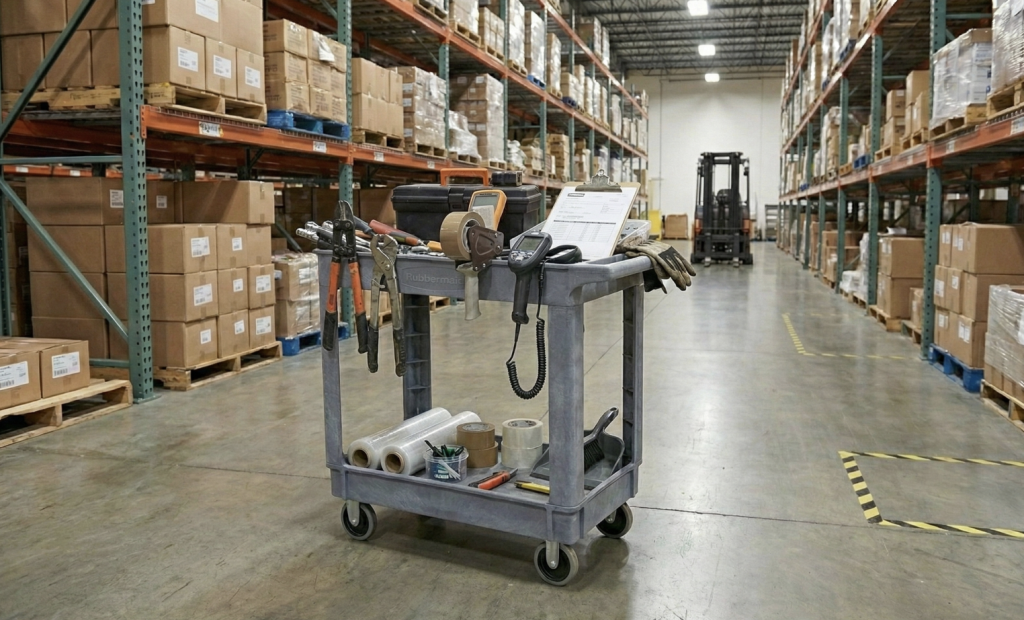
The cellular core of the part acts somewhat like a shock absorber, giving the material a degree of toughness that solid plastics can’t match. Where a rigid, solid part may crack or even shatter under the sudden stress of a dropped landscaping stone or a collision with a loading dock, a structural foam cart absorbs that energy.
The process allows us to mold significantly thicker wall sections than is possible with standard injection molding. This added thickness provides the structural rigidity needed to support heavy loads without completely buckling (some bowing is always to be expected), yet the cellular core keeps the overall weight down, ensuring the cart remains easy to maneuver. It offers the ruggedness of steel without the risk of rust, making it the ideal solution for heavy-duty, long-term use.
3. The Pallet: The Strength-to-Weight Champion
The plastic pallet is perhaps the single most common application for structural foam molding.

The engineering challenge here is brutal: the part must support thousands of pounds of static load, but it must be light enough to be moved by hand and cheap enough to compete with wood.
Why structural foam wins here:
- Stiffness-to-Weight Ratio: This is the textbook definition of why we use foam. By creating a sandwich structure (solid skin, foamed core), we maximize stiffness while minimizing resin usage. A solid injection-molded pallet of the same weight would be too flimsy; a solid pallet of the same stiffness would be too heavy and expensive.
- Rackability: The ability to span a gap in a warehouse rack is a function of the part’s geometry and modulus. Structural foam allows for thick wall sections that provide this rigidity without the penalty of extended cycle times or sink marks.
- Multi-Up Efficiency: Because pallets are high-volume items, they are the ideal candidate for the Multi-Up tooling strategies we use to run multiple heavy tools on a single platen, driving down the unit cost.
The Takeaway
When you are navigating critical decisions for a new large part, look at these three examples.
Does your part need to stay straight while buried (Drain)? Does it need to survive a drop off a truck (Cart)? Or does it need to hold a heavy load without weighing a ton itself (Pallet)?
If your project shares DNA with any of these “Big Three,” Structural Foam isn’t just an option, it’s likely the standard.
Recent posts
Controlling the Core: A Technical Look at the Gas-Assist Injection Molding Process
Posted on July 14, 2026
How to Transition from Sourcing to Purchasing Without Losing Momentum
Posted on April 22, 2026
The Benefits of Maintaining a Structural Foam Tooling Partner Across Projects
Posted on April 13, 2026