
In the world of custom plastic manufacturing, creating parts (from precise medical components to durable automotive pieces) requires more than just the right machine. It demands an unyielding commitment to quality control. The old approach of catching defects at the end of the line is expensive and unsustainable. Today, leading manufacturers view quality processes not as a necessary evil, but as the foundational element for efficiency, Compliance, and long-term profitability.
The transition from reactive inspection to proactive process management is the single most critical evolution in the field.
From Inspection to Prevention: The Power of SPC
Modern quality assurance has reached a level where it is less about counting defects and more about preventing them. The central methodology enabling this shift is Statistical Process Control (SPC). SPC uses data-driven techniques and specialized tools, such as control charts, to monitor critical process variables in real time.

Instead of waiting for a batch to finish, SPC helps operators distinguish between common cause variation (the usual, unavoidable noise in a system) and special cause variation (an abnormal shift that indicates a problem, like a failing heater or contaminated material). By flagging these assignable causes immediately, manufacturers can halt production and make corrections before a single defective part is fully formed. This preemptive intervention drastically reduces scrap rates, minimizes material waste, and is a key factor in increasing overall operational efficiency.
Achieving Consistency Through Advanced Precision
Product consistency hinges on tight control over four non-negotiable variables: temperature, pressure, speed, and cooling time. Any fluctuation in these parameters can lead to defects like warping, sink marks, or dimensional inaccuracies.
To ensure consistency, advanced quality systems rely heavily on technology:
- Real-Time Monitoring: Sensors placed in the barrel, mold, and extruder die continuously feed data back to control systems, allowing for micro-adjustments that keep the process stable.
- Automated Vision Systems: High-speed cameras and imaging technology are employed for final and in-process checks. These systems can detect aesthetic flaws, such as flow lines or burns, or verify dimensional accuracy at speeds and with a level of consistency that exceeds the human eye.
- Dimensional Checks: Tools like CMMs (Coordinate Measuring Machines) are used to perform meticulous dimensional analysis for small- to mid-sized parts, ensuring that every part adheres to the extremely tight tolerances required for complex assemblies. However, when parts become particularly large, a CMM is rarely used due to the cost. Typically, tape measures are used to measure such parts, as well as calipers & pins, due to the size.
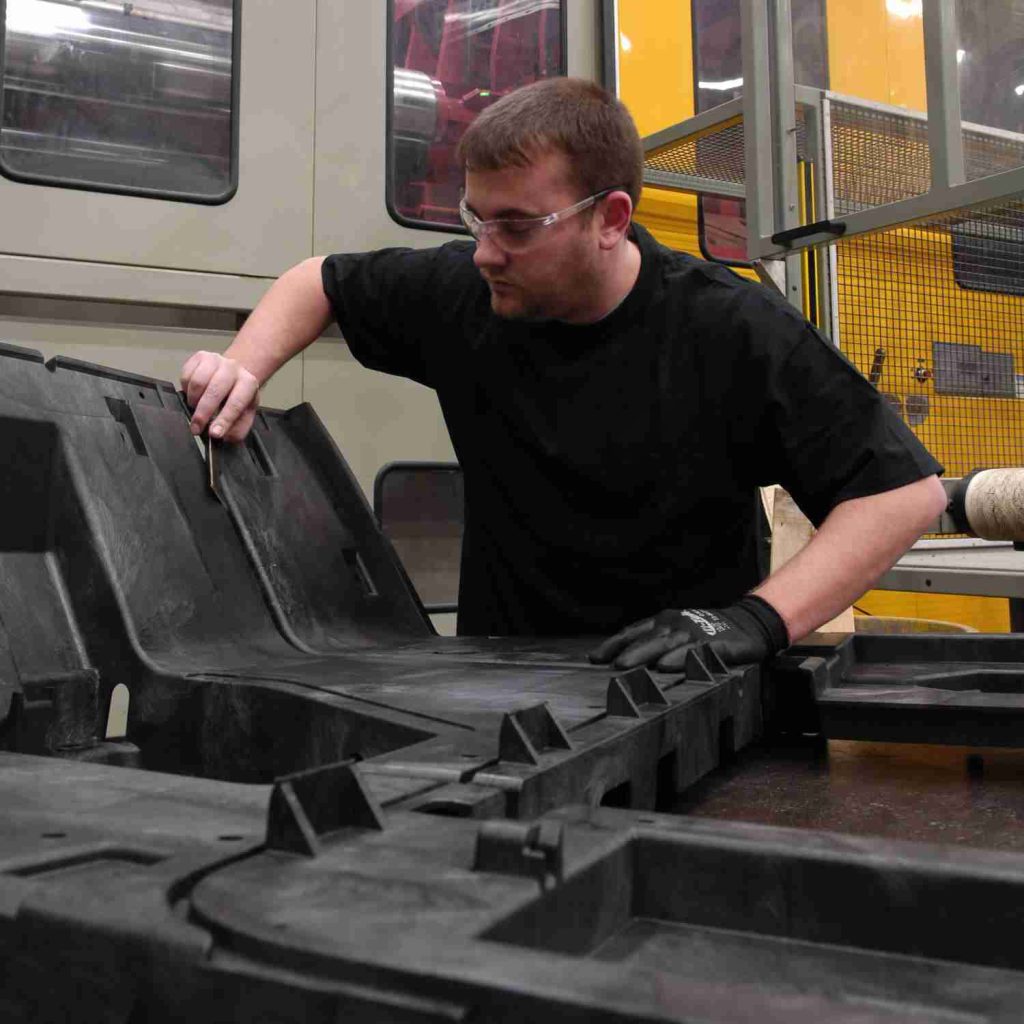
This blend of rigorous process control and advanced verification technology ensures that the product meets the specified design criteria from the first cycle to the millionth.
Protecting Reputation and Ensuring Compliance
In industries such as aerospace, medical devices, and automotive, quality is not optional; it is a regulatory requirement. Quality processes are the mechanisms by which manufacturers ensure Compliance with stringent industry standards, such as ISO certifications and FDA regulations.
A strong quality system, coupled with detailed documentation and traceability, provides an unassailable record. This is crucial for:
- Audit Readiness: Demonstrating systematic control over the entire production life cycle.
- Root Cause Analysis: Quickly tracing the origin of any field failure or defect back to the specific material batch, machine, and process settings used on that day.
Ultimately, delivering consistently high-quality products builds client trust and strengthens brand reputation. In a competitive global market, boosting customer satisfaction is a crucial strategic advantage for a plastic manufacturer. Investing in quality is not just a cost—it is a smart, strategic investment that directly impacts your bottom line and secures your competitive edge.
Recent posts

Controlling the Core: A Technical Look at the Gas-Assist Injection Molding Process
Posted on July 14, 2026
How to Transition from Sourcing to Purchasing Without Losing Momentum
Posted on April 22, 2026
The Benefits of Maintaining a Structural Foam Tooling Partner Across Projects
Posted on April 13, 2026