
There’s a specific kind of logic that often takes over in procurement meetings. It sounds like “good discipline”, competitive bids, fresh quotes for every new project, and making sure no vendor gets too comfortable. In many manufacturing contexts, that logic holds up perfectly. But when we’re talking about large-tonnage injection molding and structural foam, that same “discipline” can quickly become a hidden tax that eats your margins.
In my experience, repeatedly starting over with new molding partners tends to cost significantly more than it saves. Here is the reality of what happens when you prioritize the lowest bid over a long-term relationship.
The Structural Foam “Starting From Zero” Tax
Structural foam molding is not a plug-and-play process. It’s not like placing a standard injection mold in a press and hitting “go.” We’re dealing with deliberate under-filling, chemical blowing agents, and complex gas injection timing that has to be dialed in for every specific part geometry.
Ensuring the tooling is built to provide processing options then getting that process right the first time takes real effort. A skilled technician must find the “window” for shot size, melt temperature, and nitrogen pressure. This takes time, and it definitely takes scrap.
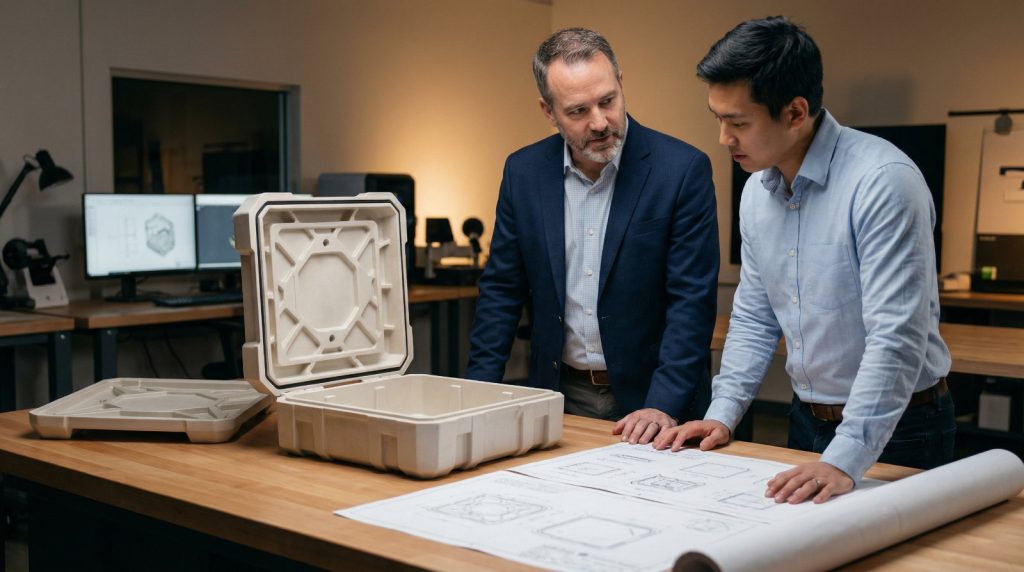
The value of a long-term partner is that once they find that window, they save the recipe. When your tool goes back on the press, they aren’t starting over, they’re optimizing. When you move to a new molder, that recipe is gone, and you’re paying for that development all over again.
Why Large-Tonnage Press Experience Matters More Than Price
I’ve seen programs stall because a molder didn’t realize that large-tonnage presses aren’t interchangeable. Things like platen size, daylight, and injection unit configuration determine whether your tool runs well or runs at all.
A molder who has run your program knows which press it belongs on and how it fits. Without that history, you’re stuck explaining to a new vendor why your tool needs a specific configuration while they learn that lesson on your accelerated timeline & dime.
Beyond the press itself, a consistent partner has already mastered your material handling protocols:
- Drying Protocols They know the exact temps needed for your specific resin blend.
- Blending & Regrind They’ve already established the potential regrind ceiling and nitrogen pressure requirements.
- Defect Prevention They know your material system well enough to prevent sink, voids, and surface porosity before the first part is even molded.
Structural Foam Quality Is Built Over Time, Not Checked Once
By the time we hit the third or fourth run at the same facility, we have something more valuable than a spec sheet: we have a quality record. We have the data on critical dimensions and a documented understanding of which areas of the tool produce the most variability.
A long-term molder knows what “normal” looks like for your tool. They know that a specific long, thick rib might show slight sink if the melt temp runs high. They catch these issues because they know the tool’s quirks and its wear patterns, like when vents load up or parting lines develop flash.
If you move that tool, you’re starting the quality record from scratch. A new molder doesn’t have that context; they find out about the problems through the same routine or by running parts until something goes wrong.
Building Molding Relationship Capital
This part doesn’t always show up on a spreadsheet, but it’s real. A molder with one program treats you like a customer; a molder running five programs treats you like a partner.

When production schedules tighten and press time becomes scarce, that relationship capital matters. You are the one who gets prioritized, the one who gets honest communication, and the one who has an advocate on the shop floor.
Additionally, think about the downstream efficiency. Large parts rarely ship “straight off the press”. They need trimming, painting, or assembly inserts. A familiar molder already has:
- The trim fixtures built.
- The paint line calibrated to your finish spec.
- The pack-out standards documented.
- A single point of contact who already knows the answer when you call.
The Honest Tradeoffs of a Sole-Source Structural Foam Partner
I wouldn’t be doing my job if I didn’t acknowledge the risks of a sole-source relationship. Pricing can drift without competitive pressure, and if a facility hits capacity issues, multiple programs can be affected at once.
But these aren’t reasons to avoid a long-term partner, they’re reasons to stay engaged. A good molder relationship requires maintenance from both sides. Review your pricing periodically and keep the communication professional.
In the world of structural foam, the learning curve is real and the cost of starting over is high. When capacity isn’t a constraint, the most efficient path is almost always the one where your molder already knows your work. If you ever do need to transition to a new facility, however, the key is a disciplined process. If you find yourself in that position, our guide on Mastering the Tool Transfer outlines the best practices to ensure your production doesn’t miss a beat during the move.
We’re Here to Help
If you’re evaluating structural foam molding partners or thinking about consolidating your programs, we’d like to have that conversation. Reach out to our team to talk through your specific situation.
Recent posts
Controlling the Core: A Technical Look at the Gas-Assist Injection Molding Process
Posted on July 14, 2026
How to Transition from Sourcing to Purchasing Without Losing Momentum
Posted on April 22, 2026
The Benefits of Maintaining a Structural Foam Tooling Partner Across Projects
Posted on April 13, 2026