
The rapid expansion of electrification across various industries—from automotive and micro-mobility to logistics and beyond—is redefining the landscape of product design and manufacturing. This transformative shift brings with it a critical need for innovative material solutions. Components for electric vehicles (EVs) and other e-mobility applications require a complex balance of lightweighting, structural integrity, thermal management, and cost-effectiveness, often pushing the limits of traditional materials. Structural foam molding offers a compelling new approach to addressing these challenges.
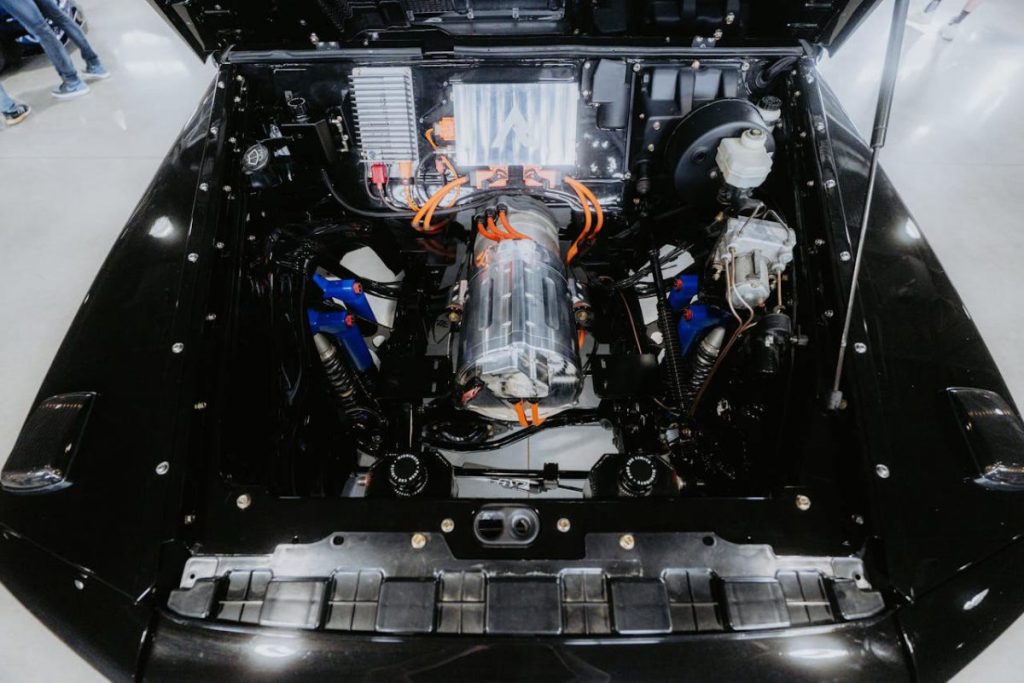
This is precisely where structural foam molding emerges as a key technology, uniquely positioned to address these multifaceted challenges. This article will explore the specific applications where structural foam molding excels in electrification and e-mobility, highlighting its distinct advantages and the design hurdles it helps overcome.
The E-Mobility Imperative – Why Materials Matter
The core demands of EV and e-mobility components are stringent and interconnected. Lightweighting is paramount, directly influencing battery range and overall energy efficiency—every gram saved contributes to better performance. Simultaneously, structural integrity and impact resistance are essential for safety, protecting vital components like battery packs in demanding environments. Effective thermal management is crucial for the longevity and performance of batteries and sensitive electronics. All these requirements must be met while ensuring cost-effectiveness and scalability to meet high-volume production targets. Traditional materials often fall short in balancing these diverse needs, underscoring the urgent demand for advanced manufacturing solutions.
A Perfect Fit for EV/E-Mobility… Structural Foam Molding
The unique properties of structural foam molding make it an ideal candidate for many of the challenges posed by electrification.
Lightweighting Without Compromise
One of the most compelling advantages of structural foam is its ability to deliver significant lightweighting without compromising strength. The process creates parts with a dense, integral skin and a foamed, cellular core.
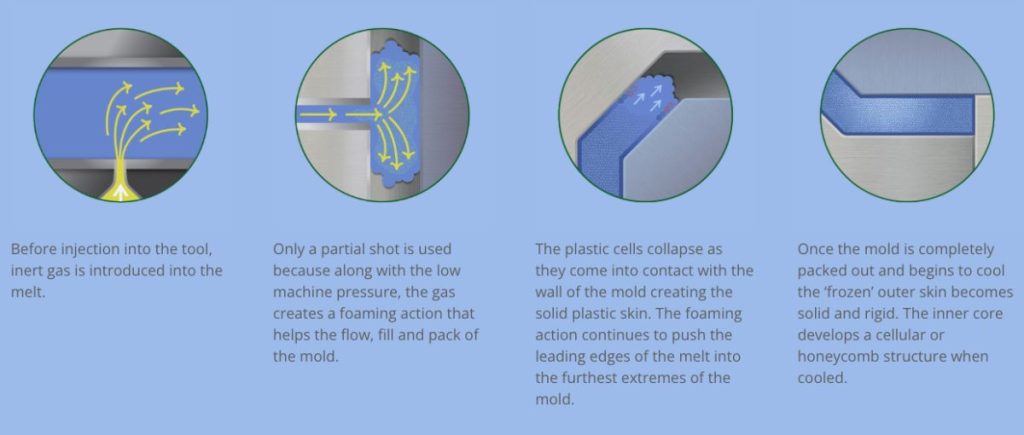
This internal structure substantially reduces material usage and weight compared to solid plastic or metal alternatives, directly impacting the range and energy efficiency of electric vehicles. Its impressive strength-to-weight ratio ensures that critical components remain robust while shedding unnecessary mass.
Structural Integrity
Structural foam parts offer exceptional structural integrity. This makes them perfectly suited for protective applications such as battery enclosures and robust protective housings for electronic control units (ECUs) and other sensitive components. The unique cellular foam structure can act as a shock absorber, capable of dissipating impact energy effectively in crash scenarios or protecting against environmental hazards. Moreover, the process’s ability to mold thick sections uniformly and free of sink marks allows for the creation of strong, rigid components with superior dimensional stability.

Design Freedom & Part Consolidation
Structural foam molding offers considerable design freedom, allowing for the creation of complex geometries that would be difficult or impossible with other processes. This capability often enables the consolidation of multiple smaller parts into a single, larger molded component.
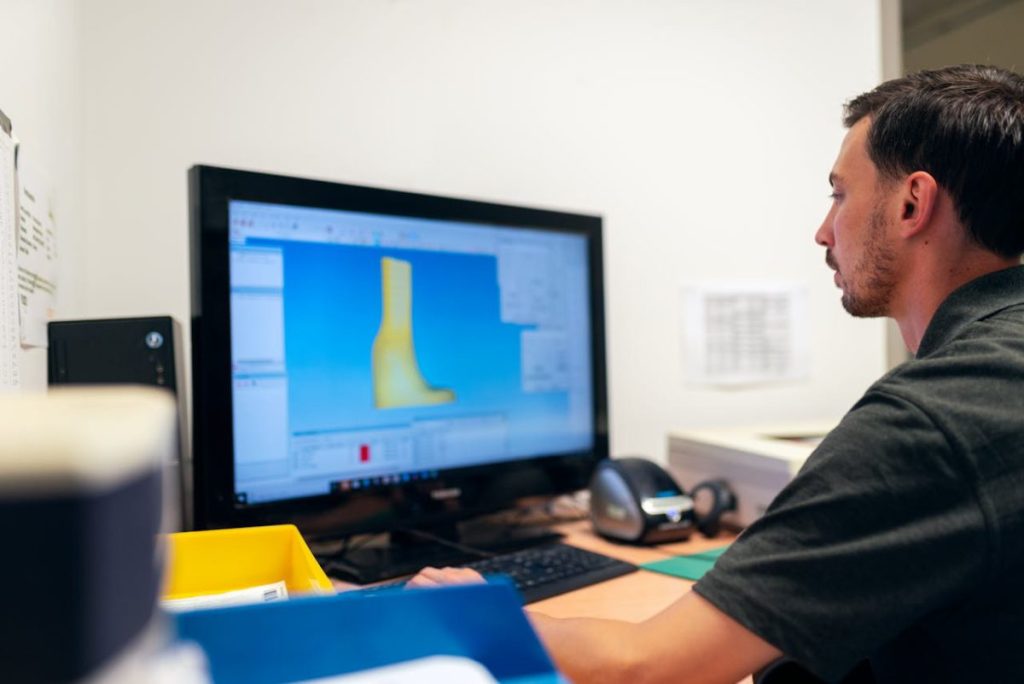
This not only reduces the number of individual parts that need to be manufactured and managed but also significantly streamlines the assembly process, lowering overall production costs and improving component reliability by eliminating joints and fasteners. Features like integrated ribs, bosses, and mounting points can be seamlessly incorporated into the design.
Key Applications in E-Mobility
Structural foam molding is already excelling in various critical applications within the e-mobility sector:
- Battery Enclosures & Trays: Providing lightweight and highly protective housings for EV battery packs.
- Charging Station Components: Durable, weather-resistant outer casings and internal structural elements for public and private charging infrastructure.
- Interior & Exterior Automotive Parts: Such as lightweight seat frames, robust dashboards, and structural components in cargo areas where a balance of weight savings and strength is key.
- Micro-mobility (e-bikes, scooters) Frames/Housings: Creating robust yet lightweight structural elements for personal electric vehicles.
- Aerospace (UAVs, Drones) Components: For structural elements where every gram counts and robust integrity is paramount.
Design Challenges and Considerations for Structural Foam in E-Mobility
While structural foam molding offers immense advantages, successful implementation in e-mobility demands careful consideration of specific design challenges:
- Material Selection: Choosing the right polymer is critical, often requiring engineered thermoplastics with specific thermal, mechanical, and fire-retardant properties to meet stringent industry standards.
- Tooling Complexity: Molds must be precisely designed to ensure optimal foam distribution, consistent wall thickness, and part integrity, especially for complex geometries.
- Integration: Ensuring seamless integration with other vehicle components and systems, including effective sealing for battery enclosures and proper fastening.
- Testing & Validation: Due to the safety-critical nature of many e-mobility components, rigorous testing and validation are essential to ensure long-term performance and compliance.
Modern plastics manufacturing for modern vehicles
Structural foam molding is rapidly proving to be an indispensable technology for meeting the evolving and demanding requirements of the electrification and e-mobility sectors. Its unique combination of lightweighting capabilities, superior structural integrity, thermal management properties, and design flexibility positions it as a frontrunner for current and future innovations.

As the push towards sustainable and efficient electric transport accelerates, embracing advanced manufacturing techniques like structural foam molding is not just an option, but a necessity for competitive edge.
Ready to explore how structural foam solutions can accelerate your e-mobility projects? Visit structuralfoammolding.net or contact our experts today to discuss your specific design and manufacturing needs.
Recent posts

Controlling the Core: A Technical Look at the Gas-Assist Injection Molding Process
Posted on July 14, 2026
How to Transition from Sourcing to Purchasing Without Losing Momentum
Posted on April 22, 2026
The Benefits of Maintaining a Structural Foam Tooling Partner Across Projects
Posted on April 13, 2026