
When you’re engineering a large-format plastic component—a medical device enclosure, an industrial chassis, or a piece of heavy equipment housing—the moment of truth arrives long after the material flows into the mold. It arrives when that part has to withstand a decade of use, protect sensitive internal components, and, frankly, look like a premium product.
At Structural Foam Molding (SFM), we’re experts in creating lightweight, rigid parts through the low-pressure process. This method yields components that are 20-30% lighter and significantly more rigid than their solid counterparts. This is achieved by creating a solid outer skin and a cellular, honeycomb-like core. However, due to the very nature of low-pressure foaming, the as-molded surface exhibits a characteristic swirl or mottled pattern, often referred to as “silvering” or “blush.”
This is where the finish becomes a critical engineering choice, not a mere decorative afterthought. For a B2B audience focused on function, durability, and cost-efficiency, painting is the definitive secondary operation that transforms an efficient structural part into a high-performance, customer-ready asset. In fact, for many applications, the coating is the final, essential layer of the entire product specification.
Let’s dive into the core engineering value and the process science behind coating large structural foam molded parts.
Part I: The Functional Payoff—Coating as Performance Specification
While structural foam delivers a superior stiffness-to-weight ratio and allows for thicker wall sections with minimal risk of sink marks, a specialized coating completes the performance envelope, effectively enhancing the part’s long-term viability in demanding applications.
Surface Perfection and Consistent Aesthetics
The cosmetic hurdle of the as-molded swirl pattern must be cleared for any consumer-facing, retail, or precise medical components. Painting is the fastest, most reliable method to achieve a Class A finish (or a consistent, precise texture) that rivals high-pressure injection molding.
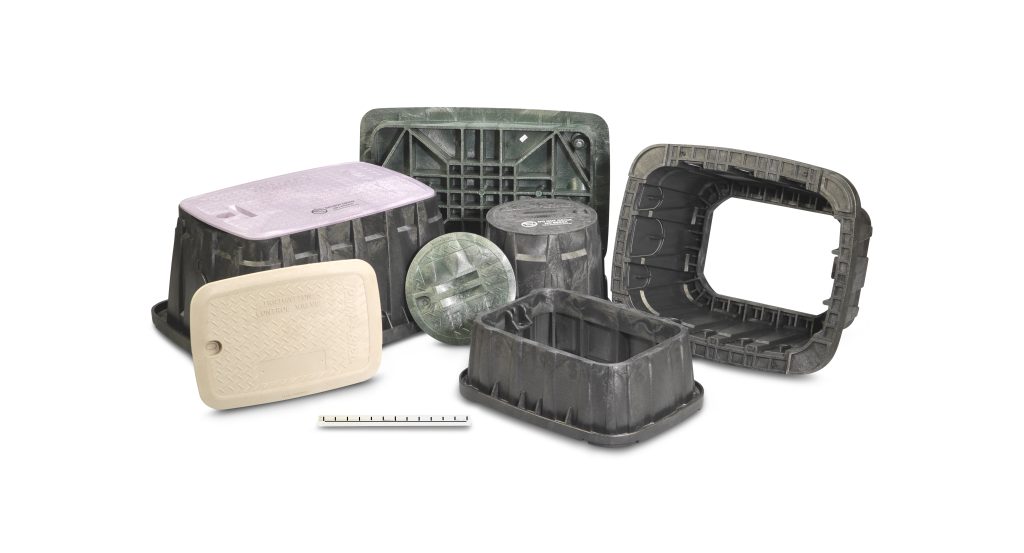
- Flaw Concealment: The coating is a cost-effective solution for hiding minor blush, flow lines, or weld lines, which are small surface imperfections that are a natural byproduct of the low-pressure foaming process. This allows engineers to prioritize optimal part performance and material flow over surface cosmetics during the molding stage.
- Brand Uniformity: For OEMs managing large product families or global supply chains, paint provides perfect color and texture consistency across thousands of parts, regardless of minor variations in resin batch or the molding conditions themselves.
Durability, Chemical Resistance, and Longevity
A premium coating is a calculated investment in the lifespan of your component, moving it from adequate to high-performance. This is particularly crucial for large, exposed parts used in industrial or outdoor equipment.
- UV and Weatherability Protection: Many standard, cost-effective plastics (like general-purpose polyolefins) degrade and become brittle when exposed to prolonged sunlight and weather. A proper, UV-rated paint system provides a crucial UV barrier, preventing material photodegradation and dramatically extending the part’s field life.
- Abrasion and Chemical Resistance: The applied coating acts as a hardened, non-porous shell. This drastically improves resistance to scratches, scuffs, and, critically, harsh industrial cleaning chemicals that could otherwise stain or chemically attack the core polymer.
Critical Functional Enhancement: EMI/RFI Shielding
In modern electronics, medical diagnostic equipment, and industrial controls, plastic enclosures must prevent electromagnetic and radio frequency interference (EMI/RFI). Since plastics are inherently non-conductive, the necessary solution is a conductive coating. This is a purely functional coating, typically utilizing an application of specialized metallic paints (often containing nickel, copper, or silver flakes) that create a conductive cage to reflect internal and external interference. The paint offers a lightweight, non-metallic alternative to heavy metal enclosures, capitalizing on the inherent strength-to-weight advantage of structural foam without compromising shielding performance.
Part II: The Adhesion Science—Preparing for the Perfect Bond
The key technical challenge in coating any plastic, especially large, low-pressure molded parts, is ensuring robust, permanent adhesion. This is not about paint quality; it’s about surface energy. Low-energy plastics, like Polypropylene (PP) and Thermoplastic Polyolefin (TPO), resist adhesion because they naturally repel the liquid coating.
The engineering solution involves increasing the plastic’s surface energy (measured in dynes/cm) to match the paint’s surface tension, ensuring it “wets out” completely rather than beading up (a defect known as crawling).

Mechanical and Thermal Preparation
Before any liquid coating is applied, the surface must be meticulously prepared. For structural foam, the essential first step is mechanical:
- Sanding and Finishing: The as-molded part must be sanded to smooth the characteristic swirl pattern and create a mechanical profile that allows the paint to key into the surface.
- Plasma or Flame Treatment: This is a final, critical step. These processes expose the plastic to a high-energy source (ionized gas or controlled flame) to oxidize the surface. This chemically alters the molecular bonds on the outermost layer, significantly increasing the surface energy and cleaning off microscopic contaminants, maximizing the material’s wettability for a strong chemical bond.
Chemical Promoters and Solvent Management
For the most chemically resistant materials, a bond layer is non-negotiable.
- Adhesion Promoters (Primers): These specialized primers act as a chemical bridge, facilitating adhesion. They are essential for achieving commercial-grade adhesion, particularly when dealing with resin systems that are notoriously difficult to coat. The industry is rapidly adopting environmentally compliant, waterborne, and non-chlorinated promoters to meet stringent VOC regulations without sacrificing bond strength.
- Preventing Crazing: A critical risk for solvent-sensitive plastics, such as Polycarbonate, is crazing—the formation of tiny cracks caused by the solvent attacking the polymer chains. Mitigating this requires careful selection of paint solvent packages and sometimes the use of barrier primers or a protective topcoat to prevent direct contact between the active solvent and the substrate.
Part III: Modern Coating Technology and Cost Justification
The coating process is constantly being refined to improve throughput, durability, and environmental compliance, all critical factors in B2B manufacturing cost analysis.
Rapid Curing and Efficiency
- UV Curing Technology: This innovation is reshaping high-volume finishing. Unlike traditional solvent-based coatings that require minutes of heat exposure to evaporate the carrier, UV-curable coatings cure instantly (under 5 seconds) via a photochemical reaction. This dramatically reduces cycle time, allows for smaller finishing lines, and is perfect for large, heat-sensitive structural foam components, as it prevents the thermal deformation (warpage) that can be a risk with conventional ovens.
- Low-VOC Systems: The drive toward high-volume, cost-efficient production means embracing high-solids or 100% solids coatings. These formulations contain minimal or no Volatile Organic Compounds (VOCs), reducing costs associated with air pollution control equipment and complex environmental compliance reporting.
Justifying the Investment
While coating is an added cost, it provides tangible savings and revenue generation that engineers must consider the following:
| Cost/Value Driver | Benefit to OEM/Engineer |
|---|---|
| Material Reduction | Structural foam already saves 20-30% on material. Coating allows the use of cheaper, standard resins because surface cosmetic requirements are delegated to the paint. |
| Tooling Lifespan | Low-pressure structural foam enables the use of less expensive aluminum tooling over steel. The paint eliminates the need for expensive, high-polish mold finishes. |
| Product Lifespan | UV/Weather-resistant coatings prevent field failure, dramatically reducing warranty claims and replacement costs over the life of the product. |
| Aesthetics/ Marketability | Achieving a Class A finish opens up higher-value markets (medical, automotive interiors) that would otherwise reject the raw structural foam look, increasing market opportunity and pricing power. |
For large structural foam parts, the painting operation is where the product gains its final structural integrity and functional capability. It is the final layer that determines performance, longevity, and ultimately, whether the part meets the customer’s expectations for a robust, high-value component.
If you’re optimizing the structural integrity of your large plastic parts, you must treat the coating as the final, and perhaps most vital, engineering specification.
Recent posts
Controlling the Core: A Technical Look at the Gas-Assist Injection Molding Process
Posted on July 14, 2026
How to Transition from Sourcing to Purchasing Without Losing Momentum
Posted on April 22, 2026
The Benefits of Maintaining a Structural Foam Tooling Partner Across Projects
Posted on April 13, 2026